Television has a strange way of making hard work look effortless. By the time South Africa settles in to watch Expresso, the cameras are already rolling, the lights are on and everything appears to be exactly where it needs to be.
The smiles are ready. The conversations are flowing. The energy feels natural.But television does not simply happen. Long before viewers hear that first good morning, someone has already been awake for hours, coffee in hand, making sure the machine is moving.
Her day starts at around 02h30, while most of the country is still asleep. At 04h00, she is already making sure Zanele Potelwa is awake. By 04h30, the studio is open.

Makeup starts shortly afterwards while the production team prepares the cameras, wardrobe and sound. Before 06h00, another meeting takes place with the director to determine exactly where the Johannesburg segments will be filmed.
For the viewer, it is simply morning television. For her, it is the final product of hours of preparation, communication, decision making and quiet pressure that nobody at home ever sees.The people behind the scenes are constantly moving.
They are making decisions, solving problems, communicating with different teams and trying to make sure everyone understands what needs to happen next. When everything goes right, nobody notices. When something goes wrong, everybody notices. That is the reality of working behind the scenes.
And when you are responsible for leading people, the pressure becomes even greater.“Being a leader is not an easy task,” she says, and there is no attempt in her voice to make it sound glamorous. For her, leadership is about people. It is about listening. It is about finding solutions. It is about creating an environment where people feel comfortable enough to do their jobs properly. It is also about knowing when to speak, when to listen and when to step in.
“You have to genuinely care about humans to be able to do this,” she says simply. That sentence perhaps explains more about her leadership style than any job title ever could.Television may ultimately be about what appears on screen, but the people creating it are human beings.
They arrive with different personalities, different pressures and different responsibilities. The way those people work together can determine whether a production feels chaotic or controlled. That makes communication essential.She believes in being honest about what works and what does not, while making sure everyone remains aligned.
It sounds simple, but anyone who has worked in television knows that keeping an entire production team on the same page is anything but. There are schedules to follow, people to contact, talent to prepare, segments to arrange, and sudden changes to absorb. And then there are the unexpected problems that simply appear because, in television, something almost always does.
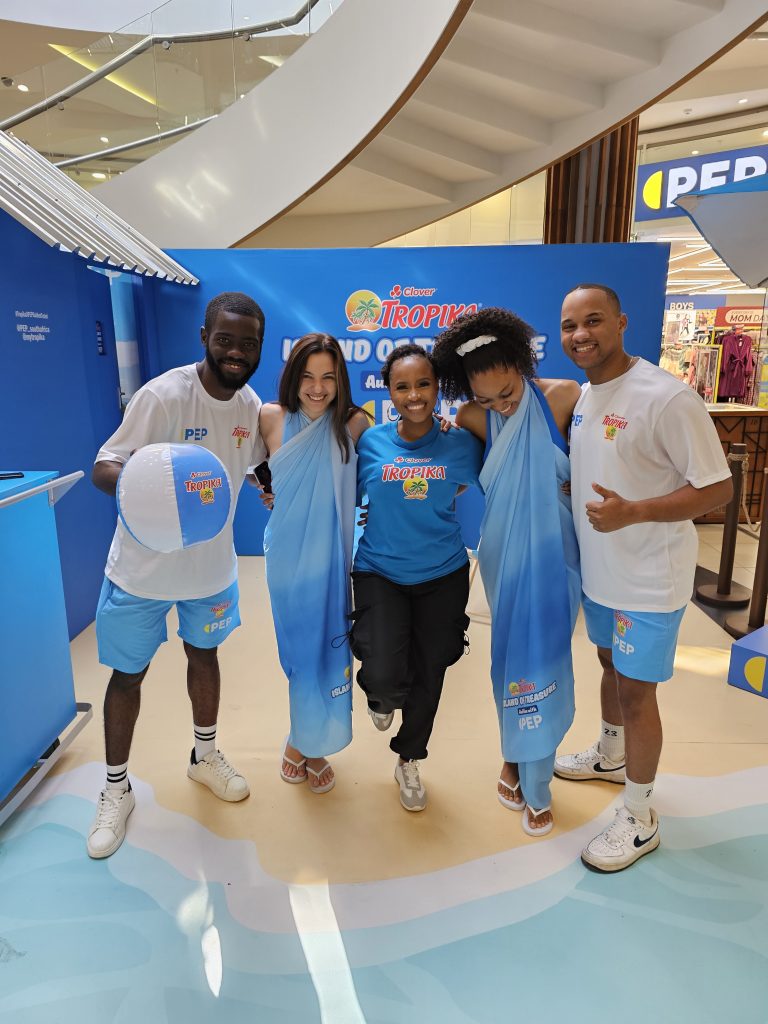
The workload does not stop with Expresso either. There are other major productions demanding her attention, including Top Billing and Tropika Island of Treasure. At times, it can feel as though there are a hundred conversations happening at once.So how does she manage it?
Her first response says almost everything.“Yohhh!!!” she laughs. “I don’t know how I do it, but IT GETS DONE. LOL!!!”
There is something wonderfully human about that answer. Because sometimes there is no perfect explanation for how people manage enormous workloads. You simply keep moving. You answer the next call.

You solve the next problem. You walk onto the next set. And somehow, the show gets made.“We’re a bunch of clowns I can tell you that much,” she jokes, and the humour hides something important. It is part of the survival mechanism. Television can become intense very quickly. Deadlines are tight. Expectations are high. Everyone is waiting for something.
A guest could arrive late. A segment could change without warning. A technical issue could suddenly appear out of nowhere. Yet somewhere inside all of that pressure, there is still room for laughter, for the kind of shared joke that only a tired crew at 5am would find funny. That matters more than people realise.A team that trusts each other can handle pressure differently from a team that does not. When people feel comfortable with one another, they communicate better.
They ask questions. They admit when something is not working. They find solutions instead of simply looking for someone to blame. And eventually, the audience feels the difference, even if they could never explain why.For her, waking up the nation every morning on Expresso is not simply about producing another television show.
There is a responsibility attached to knowing that people across South Africa are beginning their day with what happens inside that studio. The energy matters.“Energies are easily transferred,” she explains. It is a simple observation, but anyone who has watched live television understands it. A presenter can feel the atmosphere in the studio. A producer can feel it.
A guest can feel it. The crew can feel it. Eventually, the viewer feels it too, curled up on their couch with a cup of tea, without ever knowing why the show feels warm that morning.That is why the relationship between production and talent is so important. When people trust each other, they become more relaxed. When they are relaxed, conversations become more natural.
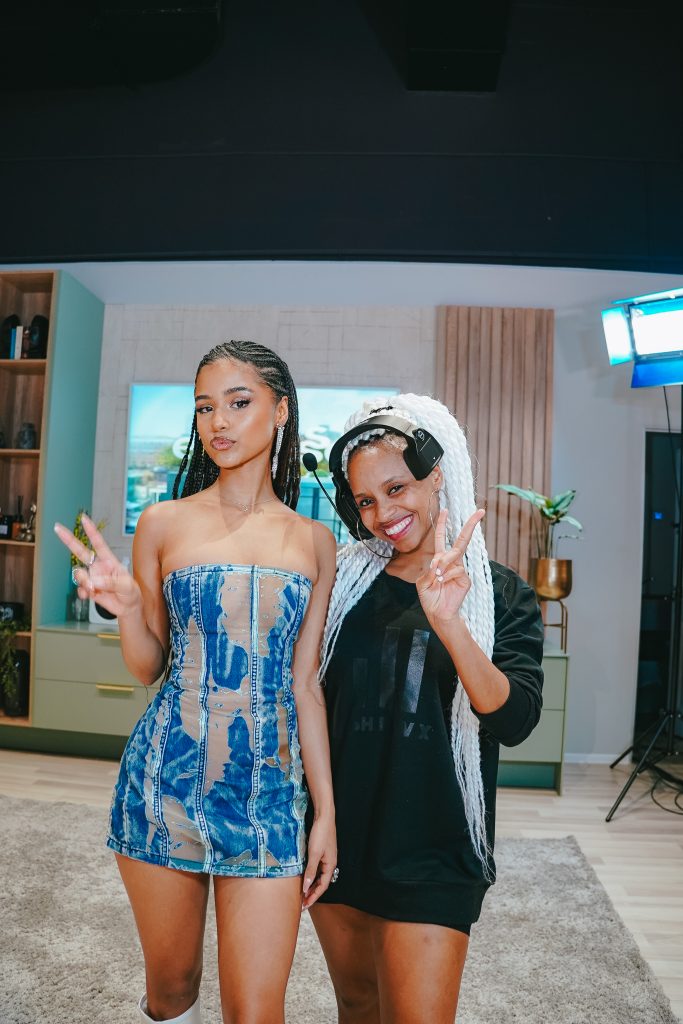

When conversations become natural, viewers are given something that cannot easily be scripted. A human moment.And perhaps that is one of the greatest rewards of her work. Not being seen. But helping somebody else be seen.One of the things she treasures most is the chance to give new artists their first television appearance and performance on Expresso. For an established star, appearing on television can be another day at work. For an emerging artist, it can be everything.
It can be the first time their family sees them on national television. It can be the first time an industry decision maker notices them. It can be the moment when something they have spent years dreaming about, alone in their bedroom or a small studio somewhere, suddenly becomes real in front of the whole country.
She remembers artists including Jazzwrld, Thukuthela and GL Ceejay, who experienced their first television moments on Expresso and have since gone on to build global profiles. She also lights up talking about Maskandi artist Feza, who had his first television experience on the show and has since achieved significant success with his music.
“These kinds of success stories will forever stay with me,” she says, and you can hear the pride in it.That may be one of the most powerful parts of her story. Because the biggest achievement is not always the one attached to your own name. Sometimes it is knowing that you helped someone else take their first step.
The recognition she has received has not changed that belief. Instead, it has given her another way of thinking about the value of the work happening behind the scenes.”The spotlight doesn’t make the contribution more important than it was before, but it validates the effort,” she reflects.There is truth in that. For years, television audiences have grown used to seeing the presenter, the celebrity and the guest while rarely thinking about the people making the moment possible.
The producer. The director. The camera operator. The makeup artist. The wardrobe team. The floor team. The runners. The coordinators. The people making phone calls while everyone else is still asleep.
They may not appear in the final frame, but their fingerprints are all over it.And perhaps that is why her story matters. It reminds us that television is not created when the red light comes on. It is created in the hours before. It is created in preparation.
It is created in conversations. It is created in problem solving. It is created in the people who keep going when nobody is watching.For anyone hoping to enter the South African television industry, her advice is refreshingly down to earth. Build relationships. Volunteer. Get involved. Take the opportunities that put you in the room. Not every opportunity will look like the dream job you imagined.
Sometimes the first step is simply being useful, dependable and willing to learn.”Relationships and practical reliability open doors much faster than a degree alone,” she says.It is advice grounded in the reality of the industry. Qualifications have their place, but television is also built on trust.
People need to know that when the pressure arrives, you will show up. They need to know that you can communicate. They need to know that you can work with others. Those relationships can become the foundation of an entire career.
Away from the cameras, however, there is another side to her. Despite spending so much of her life surrounded by television, music, events and famous personalities, she describes herself as a homebody at heart. She can cancel plans simply because staying at home, in her own space, sounds better. And when she does step out, there is usually a reason close to her heart. She wants to support her siblings. She wants them to experience the industry.
She wants to create opportunities for people she believes in, the way people once did for her.That part of her story brings everything back to where it started. People. Family. Opportunity. Purpose. Behind the early mornings, the busy sets, the television personalities and the constant movement is someone who still finds joy in music, someone who remains grounded by family and by her own personal struggles, and someone who continues to appreciate the opportunities this industry has placed in front of her.There is no perfect television day.
There are only days when the team figures it out together. Some mornings are smooth. Others are chaos. Some guests arrive prepared. Others require more work than anyone expected. Some segments go exactly as planned. Others force everyone to improvise on the spot. But the cameras still come on. The presenters still smile. The conversation still begins. And South Africa still watches.That is the beauty of television. The audience gets to see the magic without ever seeing the machinery behind it.So the next time Expresso comes on in the morning, remember that the day did not begin when the cameras switched on.
It started hours earlier, in the dark, with an alarm at 02h30. She was already awake. Preparing. Communicating. Solving problems. Checking on people. Moving between conversations. Making decisions. Keeping the show alive.The audience sees the finished product. She lives the process.And somewhere between the 02h30 alarm, the early studio calls, the pressure, the laughter, the long conversations and the constant movement, there is a career built around one simple idea. Make the show work.
Take care of the people. And when the opportunity comes, open the door for somebody else.Because sometimes the people who make the biggest difference on television are the very people the audience never gets to see.