After more than 35 years on the touchline, Muhsin Ertugral remains as curious about football as he was when he started. From the evolution of the PSL and the importance of creativity to Kaizer Chiefs, youth development and the country he now calls home, the veteran coach reflects on a lifetime spent inside the game.
For Muhsin Ertugral, football has never really been something he could leave behind.
Even after more than 35 years in coaching, the game remains part of his everyday life. He watches matches, studies trends, follows changes in methodology and continues to think about how players can be developed differently in an increasingly sophisticated football world. There is no sense that the veteran coach has become tired of the constant evolution of the sport. If anything, it appears to have made him even more curious.
“I’m very well, thank you. Football is still very much part of my daily life, obviously,” Ertugral says. “I watched the World Cup, analysing the trends as usual, where it is going and, for me, most importantly, working on ideas around player development and methodology, which has changed tremendously in science and football structures.”
Then comes a sentence that perhaps explains his longevity better than anything else.
“After more than 35 years in coaching, I’m still very curious. That is important.”
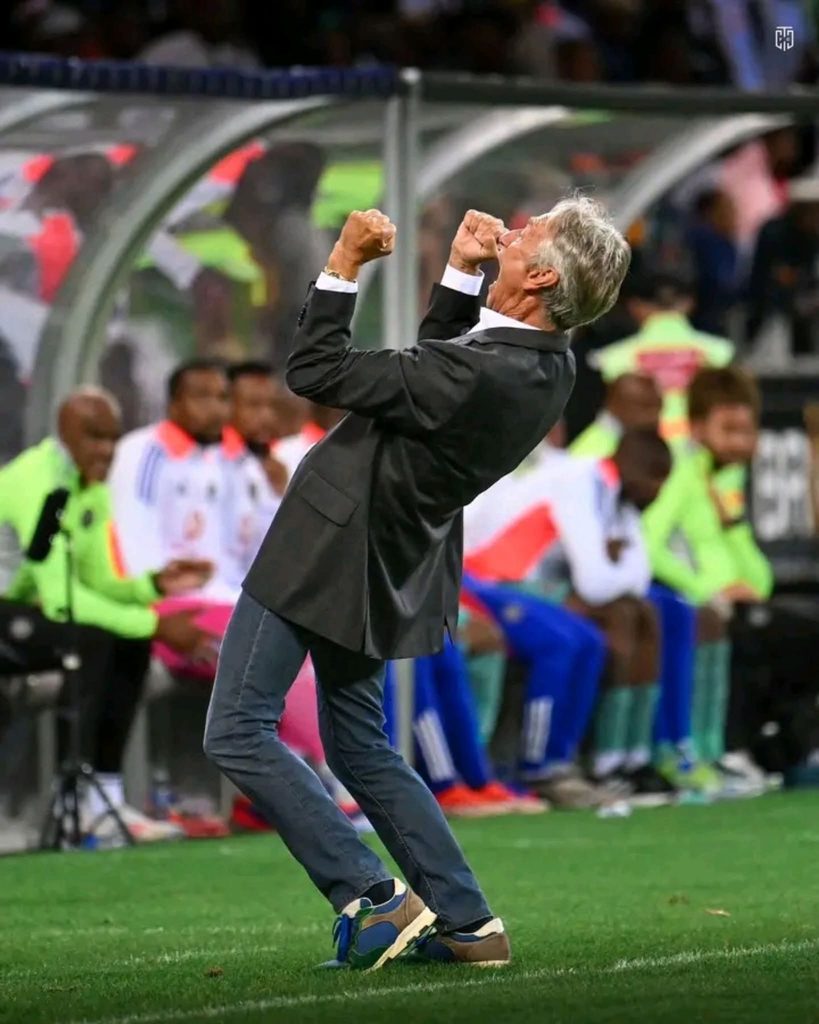

It is. Football has changed enormously during the time Ertugral has been involved in it, and few coaches who have worked for so long can speak about that transformation with the same perspective. He has seen football move from an era dominated by individual expression towards a game increasingly shaped by tactical structures, sports science, data and technology. Yet he remains wary of losing the human qualities that made the game so compelling in the first place.
His own relationship with South Africa is perhaps the clearest example of how football can become something much bigger than a profession.
Ertugral first came to the country as a coach, but somewhere along the journey South Africa stopped being simply another destination on his football map. His relationships, friendships and memories became rooted here. He learned the culture and developed an understanding of the local football landscape that could only come through years of living and working in the country.
“South Africa gave me something very special in my private life,” he says. “I came here as a football coach, but over the years the country became a major part of my life.”
“My relationships are here. I know the culture, the people and the football landscape very deeply.”
That is why he no longer sees himself as somebody who simply arrived to work in South Africa and would eventually move on.
“I don’t feel anymore that I am somebody who simply came to work in South Africa. I feel connected to the country.”
That connection also gives him a unique perspective on how South African football has changed.
When Ertugral first worked in the PSL, there was an abundance of individual talent and, perhaps more importantly, the freedom for those players to express it. He remembers working with players such as Doctor Khumalo, Jabu Pule and Thabo Mooki, footballers who could change a game with a moment of instinct or improvisation.
“When I first came to the PSL, there was incredible individual talent and what I loved most was the improvisation of special talents I worked with,” he says, before listing some of those names. “Like Doc Khumalo, Jabu Pule and Thabo Mooki — and so on, an endless list.”
There was something wonderfully unpredictable about those teams and those matches. Games could become open and spontaneous, with players solving problems themselves rather than waiting for instructions from the sideline.
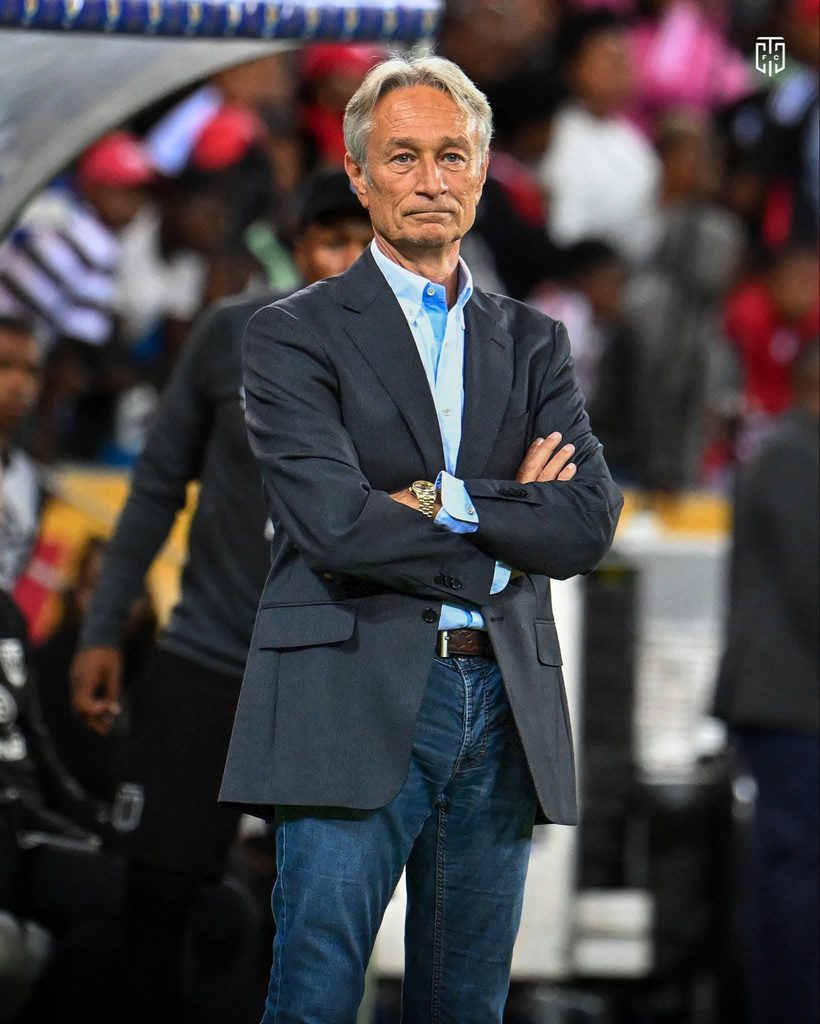
The modern game, Ertugral acknowledges, is very different.
“Today there is much more structured organisation. Teams understand pressing, rest defence, transition moments and positional structures. Sports science, video analysis, data and conditioning have changed enormously.”
He does not sound nostalgic for the sake of nostalgia. He understands why football has evolved and recognises the advantages of greater tactical organisation. But there is one thing he believes South African football must be careful not to sacrifice.
“South African football has always produced players who can solve situations individually,” he says. “Players who have courage in one-versus-one situations and can create something nobody has coached into them.”
That, for Ertugral, is the balancing act for modern coaching: giving players the tactical understanding required at the highest level without taking away their individuality.
“The challenge today is to put creativity inside a stronger tactical framework.”
It is a philosophy that has been shaped by experience. Ertugral has coached in very different environments, from South Africa to Europe and elsewhere on the African continent, and has learned that the same football ideas cannot simply be transported from one country to another and expected to work without adaptation.
Winning trophies has, naturally, provided some of the proudest moments of his career. His time with Kaizer Chiefs remains particularly significant, including the club’s success in the African Cup Winners’ Cup. But when Ertugral reflects on what coaching has taught him, it is not necessarily the trophies that come first.
“Winning trophies is obviously, for any coach, special,” he says. “I think you learn more from difficult periods than from trophies.”
That thought says something about his approach to the profession. Football can be unforgiving, particularly at clubs where expectations are enormous. Ertugral experienced that at Chiefs, Pirates, Ajax Cape Town and Black Aces, while his work with international teams exposed him to completely different pressures and football cultures.
One of his most important lessons came from understanding that coaching cannot simply be about imposing a system.
“To come to Africa, I think learning quickly that you cannot simply arrive with a European coaching manual and expect people to follow it was one of the lessons.”
The lesson eventually became much broader than football tactics.
“The best coaching begins when you understand the human being before you try to improve the footballer,” he says. “That’s what I learned after all these years.”
That understanding of the individual is also central to the way he views recruitment.
In modern football, scouting is no longer something that can operate independently from the coach’s football philosophy. Clubs spend enormous amounts of money recruiting players, but Ertugral believes the real question is not how many players a club can bring through the door. It is whether those players make sense for the football the club wants to play.
“Scouting today is one of the most important departments in today’s football,” he says. “You cannot separate recruitment from the football idea anymore.”
Before a player is targeted, there should be a clear answer to why he is being signed, which role he will play and which moments of the game are likely to suit his strengths.
“How does he fit the team’s concept?” Ertugral asks.
For him, recruitment should also create healthy competition within a squad. A club should not simply collect talented players; it should build a group in which the pieces complement one another.
And he has a particularly memorable way of explaining it.
“You can’t win the transfer window. You have to build a team.”

Few clubs understand the importance of that distinction more than Kaizer Chiefs.
Ertugral knows the club and its enormous expectations from personal experience. He understands that playing for Chiefs is not simply a matter of putting on a football shirt and performing in a PSL match. The weight attached to that shirt can be enormous, particularly when every result is felt by a huge and passionate supporter base.
He believes Chiefs are still going through a rebuilding process.
“Chiefs continue to reshape the squad since years, and that has its challenges as well for me,” he says. “So there is still a rebuilding process taking place. You can’t say it differently.”
But the solution, in his view, cannot simply be another collection of new players.
“Kaizer Chiefs’ recruitment has to be far more than finding good individual players.”
Ertugral believes the club has an identity, even if there are people who may disagree with his assessment. The more difficult challenge is finding players who can handle the expectations that come with that identity.
“An enormous level of expectation has piled up, and it’s understandable,” he says. “But now you need players who can deal with such a heavy shirt.”
He pauses on the distinction between being a good PSL player and being able to perform at a club where the emotional connection between supporters and results is so intense.
“There is a difference between playing very well for another PSL club and performing when 20 or 30 million supporters are emotionally connected to every result.”
For Chiefs, he believes the most important word now is continuity. Recruitment, coaching and player development cannot operate as separate projects.
“Recruitment, coaching and, most importantly for the future, player development have to start speaking the same language.”
The temptation in football is always to look for the next solution, the next signing or the next change. Ertugral’s argument is almost the opposite: establish a direction and have the patience to follow it.
“If Chiefs establish consistency over the next transfer windows rather than constantly restarting, then you begin building something very successful.”
That idea of continuity extends into his wider understanding of modern football.
The tactical world has become increasingly obsessed with formations. Coaches are identified by whether they prefer a 4-3-3, a 4-2-3-1 or a back three. But Ertugral believes the numbers on the team sheet tell only a small part of the story.
“For me, today’s game is about controlling transitions between different game situations.”
What matters, he argues, is what happens in the seconds after possession changes hands. How quickly does a team react when it wins the ball? What does it do when it loses it? Where are the numerical advantages? And, perhaps most importantly, do all 11 players recognise the same situation at the same time?
“The best teams have collective perception.”
Technology has made it possible to analyse those moments in extraordinary detail. Data can reveal patterns that coaches and players may not have noticed previously. Video analysis has become an essential part of preparation, while sports science has transformed the way players train and recover.
But Ertugral believes the industry needs to remember that football is not played by numbers.
“Technology and data have helped us enormously in recent years,” he says, “and it comes to a point where it gets dangerous. Football cannot become a spreadsheet.”
There is still room for intuition. There must be room for personality. And there must be players brave enough to make decisions when the game becomes chaotic.
“You need intuition, personality and players capable of making decisions under pressure.”
That belief in the human side of football also explains his views on how clubs should be run.
A football club, he argues, cannot have several competing philosophies operating under one roof. The chairman cannot be thinking one way, the sporting director another, recruitment another and the coach something completely different.
“A football club cannot have four different football philosophies inside the same building,” he says.
When that happens, it is ultimately the players who suffer.
“Then the players become the victims of the structure.”
That does not mean everyone in a good football organisation must agree all the time. In fact, Ertugral believes disagreement can be healthy.
“You can disagree internally. And I really believe good football organisations have to disagree.”
The important thing is what happens after the discussion.
“But in the end, when you get out of that meeting everyone has to travel in the same direction.”
For that to happen, there has to be trust.
And when Ertugral talks about the future of South African football, there is one subject on which his voice becomes particularly emphatic: the development of young players.
South Africa produces talent. He has no doubt about that.
“We produce talent. Sure. That is not the problem.”
The bigger issue is what happens to that talent between the academy and professional football.
“What happens between 17 and 20?”
Those years can determine whether a promising young player becomes a professional or disappears from the pathway. A talented 17-year-old needs competitive matches, individual development, physical preparation and tactical education. But there is another ingredient that can be just as important.
“He needs a coach who trusts him.”
The most serious clubs, Ertugral says, do not simply leave the development of elite young players to chance. They create individual pathways that can last two to four years and deliberately expose players to increasingly demanding environments.
“The serious clubs that I know have an individual 24- to 48-month pathway for their elite young players.”
That means first-team training, competitive football and a carefully planned progression rather than simply having an academy and assuming the job is done.
“Development is not just simply having an academy.”
He recalls work looking specifically at the demands placed on players between 17 and 19, including the volume of games and quality training required to prepare them for senior football.
“We looked more into the age of 17 to 19 — 150 games and at least 500 proper training sessions.”
It is an enormous commitment, but Ertugral believes that is precisely where the future of South African football will be decided.
“The bridge between elite development and professional football is where actually careers are created or lost.”
And if South Africa can improve that bridge, he believes the consequences could be significant.
“If South Africa improves that bridge, the ceiling of our football will change dramatically. I am pretty sure of it.”
There is a sense, listening to Ertugral, that his football journey has brought him back to the place where so much of his professional life was shaped.
Born in Istanbul and raised in Germany, he has travelled through different countries, cultures and football systems. He has lived the life of a football coach in the truest sense of the word — always moving, always learning, always adapting.
“My identity has always had different places inside me, I think,” he says.
His wife, he jokes, still reminds him of the travelling nature of his life.
“My wife jokingly always says, ‘I am still on the road.’”
But after all those miles, there is one country he now speaks about differently.
South Africa is no longer simply where he worked.
It is home.
“Yes, sure. I think after all these years I can say that.”
“My life is here. My friends are here and a large part of my football history is here.”
He has experienced the best of the country and some of the hardest moments too. Perhaps that is why the connection feels genuine.
“Maybe that is what eventually makes somewhere home, isn’t it?” he says. “You don’t only know the beautiful side of a place. You have lived through everything.”
And perhaps that is also why, after more than 35 years in coaching, Ertugral continues to look at South African football with the curiosity of someone who believes the story is far from finished.
He has seen the game change. He has coached generations of players. He has won trophies, endured difficult periods and worked across different football cultures.
Yet he still watches.
Still studies.
Still questions.
Still believes.
“After all these years, I still look at South African football and believe there is so much more possible.”